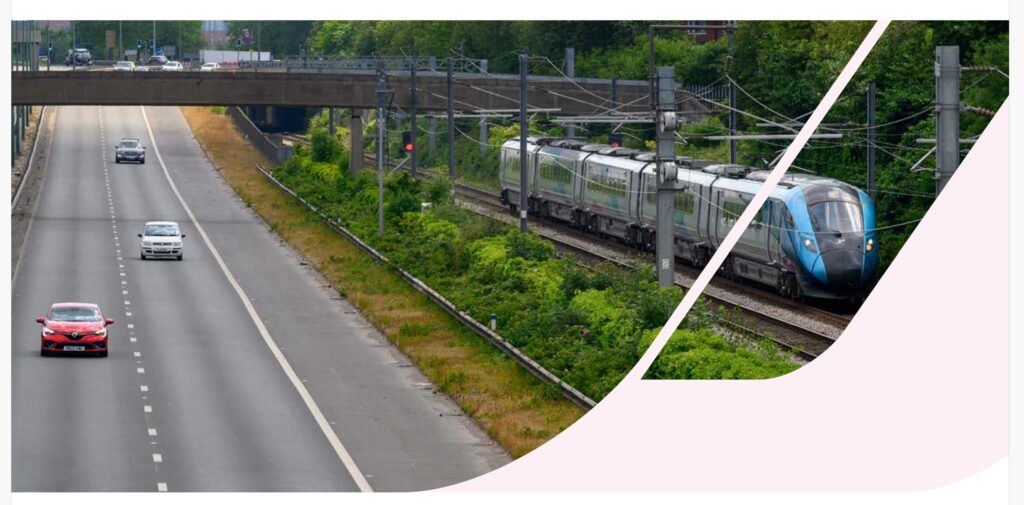
National Highways have missed their safety reduction target by a massive 12% !
Transport Action Network defines its purpose as "helping communities to seek better and more sustainable transport, supporting more investment in bus and rail services and active travel. [..] It continues to oppose spending on damaging roads, and supports better integration between transport and planning".
TAN has analysed the latest National Highways Report and Accounts and the accounts of its regulator, the Office of Rail and Road (ORR), Annual Report and Accounts and has some hard things to say about missed targets for improving road safety and a poor picture as regards carbon emissions. TAN is especially critical about the money being thrown at the Lower Thames Crossing.
As regards Chinley, it's especially interesting to read TAN's summaries, particularly as regards the Lower Thames Crossing, given the DfT's abandonment of Access for All funding for a modest 19 stations including Chinley in January 2026.
TAN's fact sheet on the Lower Thames Crossing gives some staggering estimates of the overall cost of the project and puts the Benefit Cost Ratio at 0.48 -ie for every £1 spent, 48p is returned to the economy. TAN concludes that the project is "swallowing up limited funds for transport, meaning better value and more sustainable projects cannot go ahead"
Given the sums involved, it is interesting (alarming? depressing?) to read the rationale behind the indefinite deferment by the DfT in January 2026 of Access for All projects for extremely busy stations such as Cricklewood and Palmer's Green as:-
“the benefits such upgrades would deliver to users of the station would not justify the significant disruption caused to other users of the [named] line & significant costs to passengers + taxpayers”
Palmers Green for example has no step-free access and a footfall of almost 2 million entries/exits. Cricklewood’s footfall is not far off 1 million entries/exits, and so one must ask therefore how a calculation can be made that the ongoing and future inconvenience that is caused by a lack of step-free access to rail users and those who cannot access the platforms is somehow trumped by the cost of improvements?